
The full, journalistically authored feature article has already been published in several renowned industry and trade media outlets:
Modular Special-Purpose Machines as a Scalable Solution
Axial flux motors are regarded as a highly power-dense and efficient alternative to conventional radial flux drives. For e-mobility, they offer decisive advantages: compact design, high torque density, and improved energy utilization. This opens up new possibilities for innovative vehicle concepts.
However, industrial implementation remains challenging. Complex geometries of the lamination stacks, demanding precision requirements, and the lack of standardized production processes have so far limited large-scale series manufacturing. New modular machine concepts and specialized process modules are now enabling the transition from prototype development to stable, high-volume production.
From Technological Potential to Industrial Reality
Axial flux motors deliver high torque at low mass and offer greater flexibility in vehicle integration. For OEMs, this translates into improved efficiency and new design opportunities.
Yet, unlike radial flux motors, axial designs do not benefit from decades of optimized production processes.
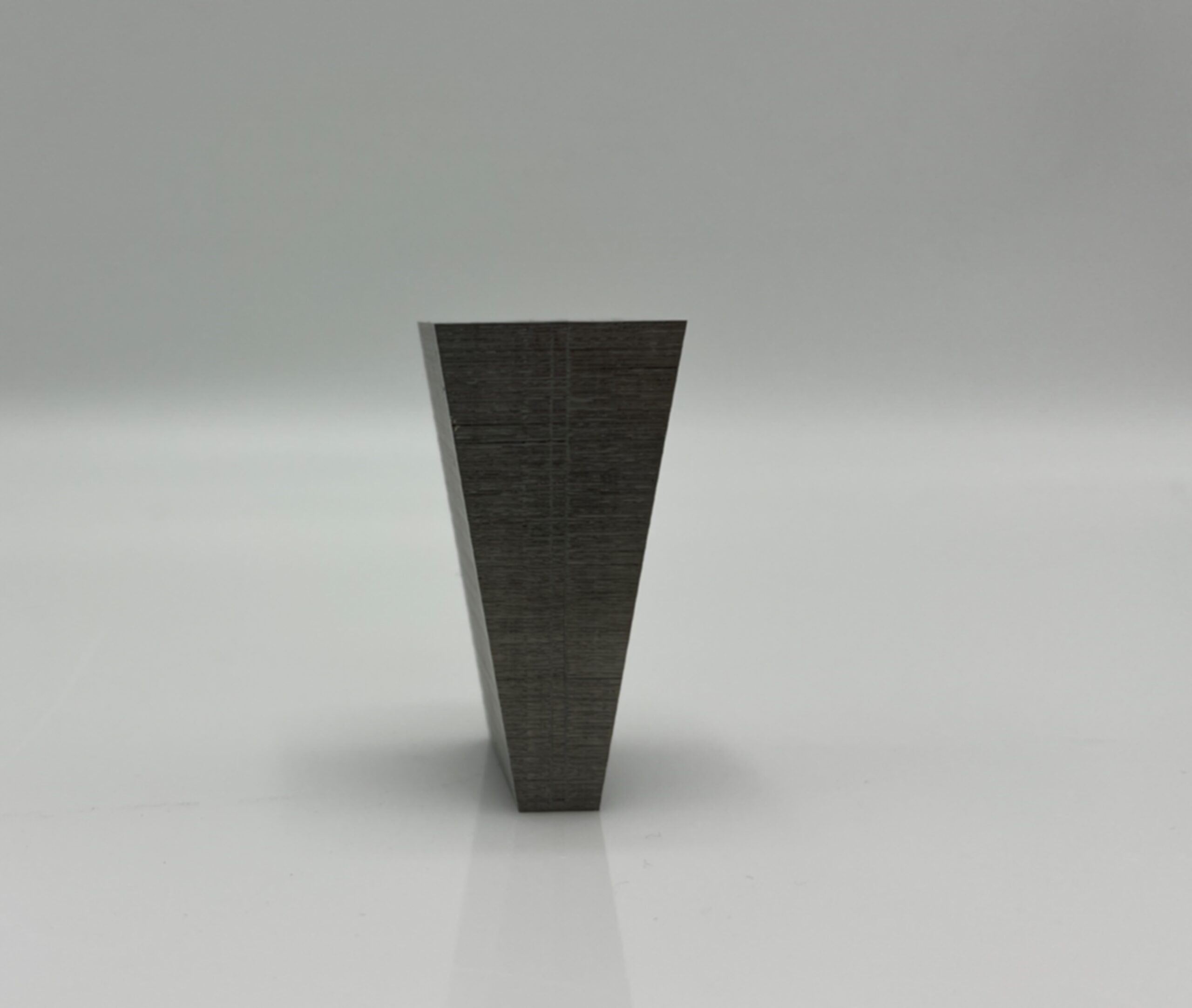
The geometry of axial flux lamination stacks requires fundamentally new manufacturing approaches. Conventional large presses quickly reach technical and economic limits. The challenge lies in developing processes that ensure process stability, reproducibility, and scalability while meeting automotive quality standards.
Facts
- Modular and automated machinery
- Segmentation for greater sustainability
- Smaller systems with higher process stability
Industrialization Challenges in Series Production
While prototype solutions may work in development environments, OEMs require consistent quality across large volumes. Tool design, material handling, and quality control must be adapted to entirely new geometries. Short cycle times and rapid ramp-up from pilot production to mass production are essential.
Traditional production lines are typically optimized for fixed quantities and specific geometries, making flexible scaling difficult. This creates investment risks when introducing new drive technologies such as axial flux motors. Without adaptable manufacturing concepts, industrialization remains a major hurdle.
Modular Special-Purpose Machines as a Scalable Solution
To address these challenges, modular production systems provide a structured and scalable pathway to series manufacturing. A modular architecture allows production lines for axial flux components and lamination stacks to be built step by step and expanded as demand grows.
Specialized process modules are employed, including innovative punching and tooling concepts, precise stack formation, high-strength bonding and joining technologies, as well as integrated inspection and measurement systems. This combination ensures high process stability while maintaining maximum flexibility.
For OEMs, this approach significantly reduces investment barriers. Production can start at series-ready standards from day one and scale dynamically with market development. Modular lines can also be installed close to the point of use, enabling OEMs to increase vertical integration and reduce logistical complexity.
Integrated Quality Assurance and Data-Based Optimization
In the automotive sector, uncompromising quality is a fundamental requirement. Integrated sensor systems, tactile and electromagnetic measurement methods, as well as data-driven real-time analyses ensure compliance with tight tolerances.
Continuous data acquisition also enables full traceability, process optimization, and predictive maintenance. The result is a production system that remains stable, efficient, and future-ready over the long term.
Practical Implementation and Outlook
Initial industrial projects demonstrate that the series production of axial flux components is already achievable with the right technological framework. Modular manufacturing lines have proven capable of meeting demanding automotive standards for quality, scalability, and flexibility.
Looking ahead, automation, digitalization, and sustainability will further shape axial flux production. AI-supported quality control, energy-efficient processes, and resource-conscious manufacturing concepts will play an increasingly important role. Beyond passenger vehicles, axial flux motors are also gaining relevance in alternative vehicle concepts and aviation applications.
Conclusion
Axial flux motors offer significant potential for the future of e-mobility, but their industrial implementation requires new production strategies. Through modular machine concepts, specialized process modules, and integrated quality assurance, series-ready manufacturing of axial flux components becomes economically viable and scalable.
The technology has moved beyond the prototype stage. With flexible, future-proof production systems, axial flux components are becoming a competitive and sustainable solution for next-generation electric drives.
When will you move into the next generation of e-mobility?
Series production of axial flux components requires new approaches in design and manufacturing. With innovative production technologies, scalable processes, and maximum precision, we create the foundation for high-performance and efficient electric drives.
Let us bring your axial flux projects into series production — economically viable, technologically advanced, and future-proof.
Speak with our experts about your specific requirements.